Flint 3 Wireguard Speeds

But not everybody does put everything through a Wireguard/VPN tunnel.

If high speed VPN is actually that important, I would just use one of the cheap mini-PC with 2x 10gbit SFP+ and intel n305/355 and OPNSense/PFSense...

Like was said DOZENS of times, Flint 3 has pros and cons on Flint 2. If Flint 2 does something better, which is important for your use case, get that and skip Flint 3.

2 Likes

I brought up the VPN speed lower in my post that you excluded from your quote. Not all traffic goes over Wireguard. Many people who want those higher speeds care about them primarily for LAN use. Almost nobody has >1Gbps home internet service (not to mention VPNs that will give you that level of throughput), so I assume that it's understood that I'm referring mostly to LAN speed requirements there.

And if you really do ONLY care about Wireguard speed, then just continue reading my full comment.

Almost nobody has 1 Gbps?! That is going to depend on which country. In Europe is pretty common. Japan, Korea, Taiwan, and a lot others. Hell even Turkey with censored internet has 1 Gbps.

You don't have to rely on intuition here. What I said is accurate. And I said that almost nobody has home internet over 1Gbps. See here: Speedtest Global Index – Internet Speed around the world – Speedtest Global Index

The top country for fixed broadband speed is Singapore, and their average is still less than 370Mbps.

As a software engineer, I have to disagree with that "nobody" part. I am a full time traveler, been to well over 40 countries and what I have seen, it's definitely not what shows up on those charts.

The Speedtest Global Index, while valuable for what it is, is not representative. Also, even at those median values, it doesn't mean "almost nobody" has 1 Gbps.

Rather than me explaining, here is an AI answer which is also clear about this.

Medians don't reflect infrastructure capability:

  • In right-skewed distributions (where most values cluster at lower speeds but a significant portion extends to much higher speeds), many users could be getting gigabit+ speeds while the median remains much lower
  • Many providers in Europe and Asia offer 1 Gbps and above plans as standard installation, but plan availability far exceeds what aggregate measurements suggest

Testing bias and methodology issues:

  • A majority of people testing either have internet issues or suspect slow speeds, while users with consistently good performance are less likely to bother running speed tests except when something goes wrong - this brings down the median
  • People who choose the cheapest available plans are usually the ones who most complain about quality and test more frequently - this doesn't mean higher speed plans aren't available
  • Many users test over Wi-Fi rather than wired connections, limiting results to router capabilities or noisy neighbors in apartments where interference can happen
  • Test servers may not handle maximum speeds effectively during peak usage

Equipment bottlenecks everywhere:

  • Most ISP-provided routers have slower Ethernet ports (older ones often have 100 Mbps, newer ones come with gigabit instead of 2.5 Gbit or 10 Gbit)
  • Long-term clients have older Wi-Fi equipment that remains slow even if ISPs upgrade their speeds
  • Older phones/computers can't fully utilize gigabit+ speeds
  • Rural areas and legacy connections pull down medians

Conclusion:
The real bottleneck isn't the network—it's the equipment. As ISPs offer multi-gigabit fiber and WiFi 7 enables higher speeds, router WAN ports become the limiting factor. While most laptops have 1-2.5 Gbps ethernet, gaming and professional setups increasingly have 10 Gbps or WiFi 7 available. Given the speedtest dataset scale, even if only 5% of users have speeds above 1 Gbps, that still represents millions of people—hardly "nobody." Since ISPs purposely provide limiting equipment, tech-savvy users and professionals increasingly seek capable, future-proof routers to replace their native ISP hardware and unlock their connection's full potential.


I would say that at that price point, Flint 2/3 are great routers for the majority of people, but it wouldn't kill anyone to have a single SPF+ port or 10 Gbps port (or make a new model) for those people that want to use that connectivity. Obviously, the price would go up, but still, the option could exist even if as a variant or under a different flagship model.

With the 2.5 Gbps only, a lot of people are happy but a lot of people are also not happy. There is a reason why people come here and write complaints about it. Giving a 10 Gbps port capability, and letting users have the choice of upgrading their ISP plans or not, would make it perfect. Like this, is just disappointing.

That is in itself good and bad. Good because people have higher expectations from GLINET devices... and bad, because those expectations are not being met.

So with all that said, is the Flint 2 too slow for you? Do you feel inadequate by having the "v2" when there is a "v3" product? If all you care about is WiFi 7 AND you must use a GL.iNet router, simply disable the built-in WiFi and get yourself a WiFi 7 access point. There are numerous ways to get more speed wherever you're looking to get it. If GL.iNet's products in general have become too slow for you now that the Flint 3 has been released, you can use another brand or DIY using your own hardware with OpenWRT, pfSense, or OPNsense on it. At one of my homes I'm now using a Spitz AX as my cellular modem, but I'm not using its WiFi because I wanted something more powerful. It's not hard!

Honestly if I read through the posts here, I'm afraid people get confused :wink:

Just that it says that a port has 2.5gb/s doesn't mean the cpu can do that especially if it goes lower than the Flint 2, therefor it's more marketing than the actual thing, and more so a waste making the equipment more expensive, I'm not telling it is not possible but it will never be more than what the Flint 2 can do but a little lower as expectation.

If the flint 2 has a higher clock, it also make higher speeds wired, this also includes more cpu utilisation power for encryption like in wireguard, naturally the flint 3 would be slower here.

It becomes more interesting when someone is interested in only the wifi aspect of things, then this chip is likely more powerfull in offloading wifi speed than the Flint 2, however if you expect that over wan or lan it will likely bottleneck, it might be only interesting for very niece setups over wifi, directly on the flint 3.

It's true btw, that almost 90% of all slow speed is on the users fault, sometimes their hardware is bad, other times their cabling or these CAT cables avoid the maximum certificated range in where the copper signal degrades fastly, or cable cores are exposed, or multiple network switches which overwrites the maxinum switching capacity.

Alot of isps actually try to combat this on their part by sending extra speed overhead from their side for the long distance road, this is why the percentage is 90% as users fault and not the isp :slight_smile:, but there are also isps who make mistakes.

There are countries like the Netherlands where they have 2gb/s internet :face_savoring_food:, but for me this isn't interesting and expensive, I'm lancaching with about the same kind of speed, my max on the flint 2 is about 1.9 gb/s and probably with better cables even more. (CAT5E < CAT6A).
^ and otherwise it can be just the disk being a bottleneck, this can even happen on the average person that their speed appears slow and depending on the testing you might be using this disk read and write speed all along.

No no, as I said several times, these are good routers. Flint 2 is a good router for my current usage. I just expected Flint 3 with wifi 7 and MLO to finally be able to use my full internet speed of 8 Gbps (its 50 euro btw) should it have spf+ for example, so its disappointing in that area.

I don't have to use gl inet routers no, but I have used them for enough time and would like to continue using them and support the brand. Just wish they do something a bit more higher end.

50 euro for multi gigabit speed is not typical for many.
Germany, United Kingdom, Canada, Australia, USA etc all have gigabit or higher available but most users choose lower speeds to save money. Or their location doesn't allow for the highest speeds.
100-300mbit/sec is common.

Products from gl-inet and similar might be targeting these markets.

Toob, Plusnet and many others offers 900Mbps for less than €50.

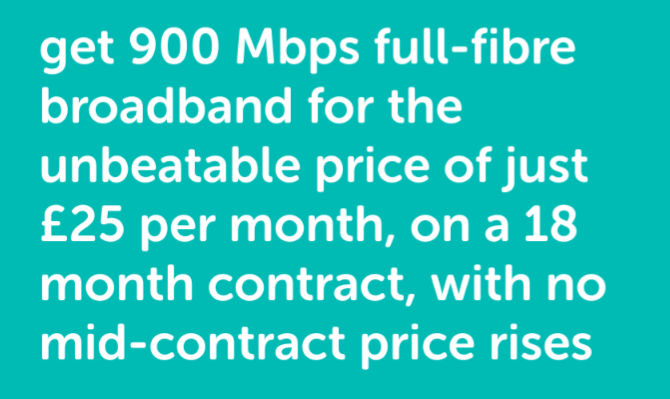
Toob, for example, offer 900Mbps download and 900Mbps upload for £25

Agreed.

My mother-in-low, for example, has 500Mbps internet speed but she uses her old mobile phone on 2.4GHz that when testing on Speedtest will result in 150Mbps speed.

And many others do the same :joy:

1 Like

That is due to monopoly or "protected interests" in only very few EU countries like Germany, Austria and Belgium. Most of europe has sub 50 euro plans with over 1 Gbps, unless you go with the typical historical operators which are usually overcharging.

https://www.perplexity.ai/search/list-all-internet-fiber-prices-l.TPcS48SUCqHOCdt4W0sA#0

Or for 10gbps specifically in Europe
https://www.reddit.com/r/AskEurope/comments/1ktf0nx/10gbps_internet_in_european_union/?utm_source=perplexity

How they give you these prices becomes possible if you realize they then give you a router that has slow wifi or slow wan and it is not capable of actually using those speeds. Its there, available, but you are not able to use it due to either their router or your own devices.

Is Asia, several countries also have 1 Gbps or above at least in the main cities, obviously depending on your location and network availability. If you consider more developed countries like Japan, South Korea snd Singapore (thats a lot of people) you can also relatively easily get up to 10 Gbps under or around 50 euro.

https://www.perplexity.ai/search/list-all-internet-fiber-prices-Dz3.2P81QtWGQv1fjle6iQ

Yes I said gigabit is available, but often costs more than people want to pay and is also not available in all locations.

Cherry picking select properties in dense cities and offering cheap rates is easy.
Many of the "protected interests" are mandated to cross subsidise access costs so a greater portion of a population has similar access costs regardless of location.
A smaller company cherry picking select profitable areas excludes all kinds of economic and social issues and likely only put further pressure on the incumbents ability to cross subsidize areas where access costs esculate quickly.

The above reasons is why many do not have gigabit or higher access speeds. Many have access speeds of 100-300mbit/sec.
Many of these countries with slower internet speeds are countries likely targetted by companies such as glinet as they are large populations with high incomes.