Hello everyone,
I would like to share some real-world testing results from the latest GL-MT6000 OpenWrt 25 Beta (mt6000-op-4.9.1-op25_beta1-1032-0707-1783421695).
The purpose of this topic is to provide practical measurements that may help both the community and the GL.iNet development team.
Test Environment
-
Router: GL-MT6000 (Flint 2)
-
Firmware: OpenWrt 25 Beta (Kernel 6.12.94)
-
Test tools:
-
Apple AirPort Utility (RSSI)
-
TP-Link RE715X (Backhaul quality)
-
LuCI
-
GL.iNet Admin Panel
-
Speedtest
-
Test 1 – Panama vs USA
I compared exactly the same configuration using only different country codes.
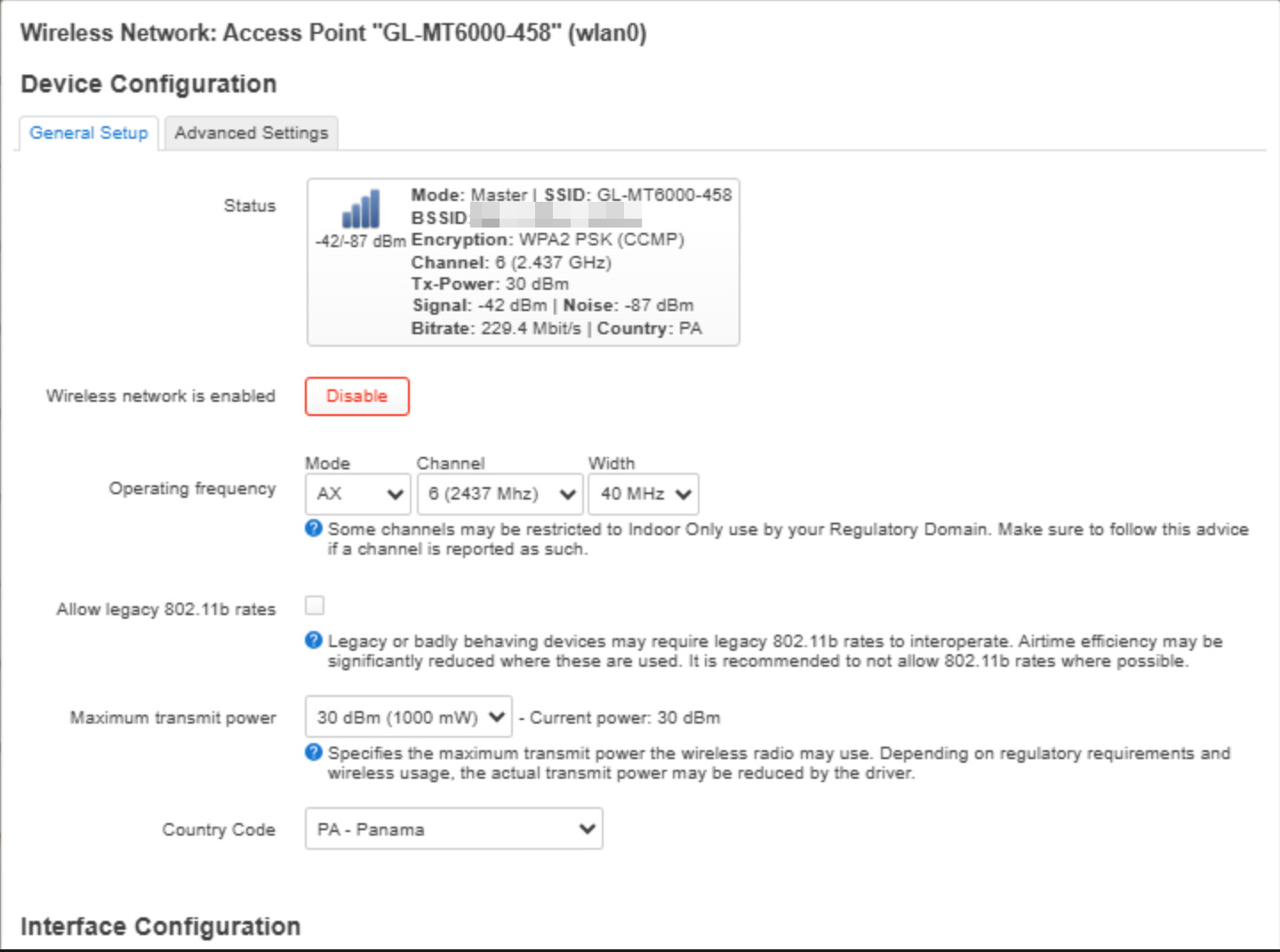
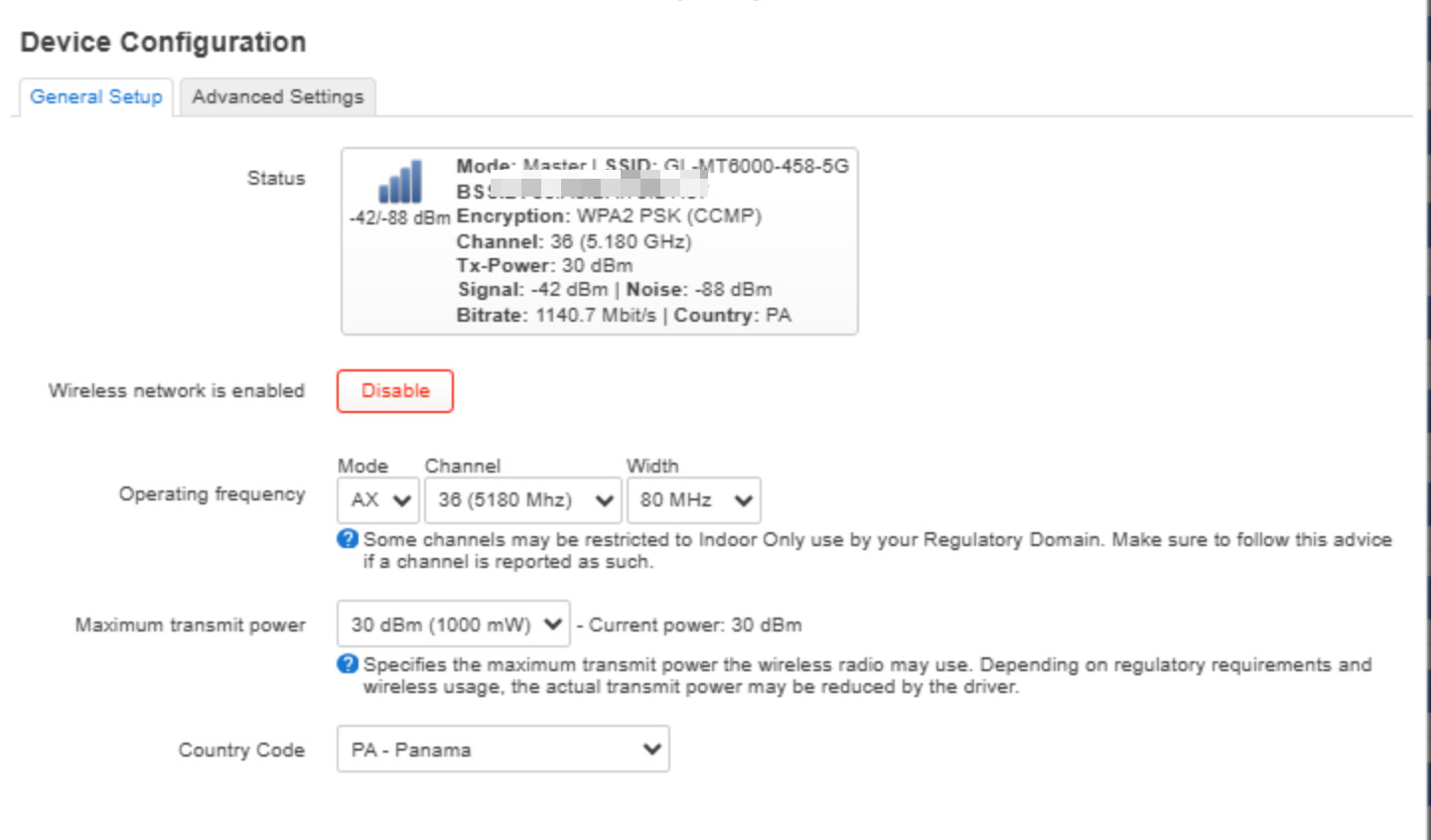
USA
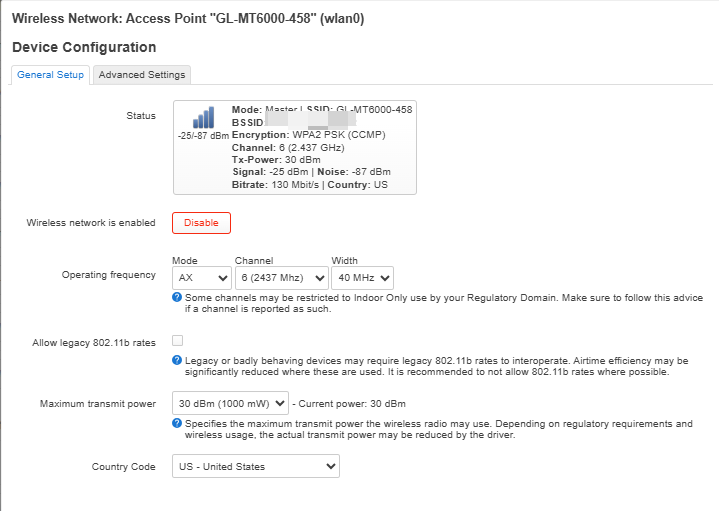
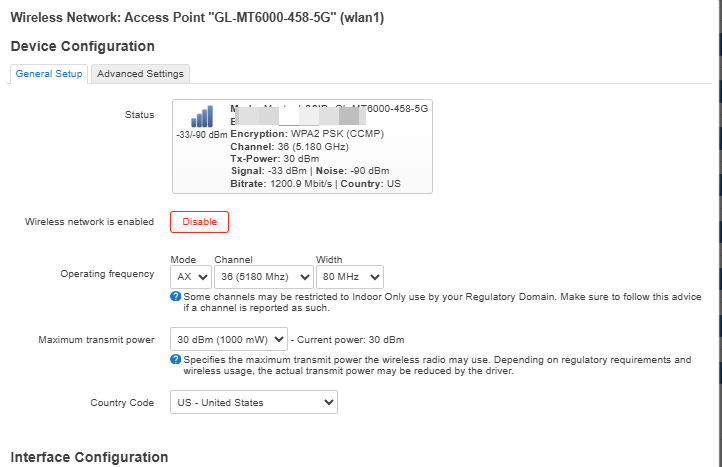
LuCI reports:
-
2.4 GHz = 30 dBm
-
5 GHz = 30 dBm
GL.iNet Admin Panel:
- Wi-Fi Coverage = Max
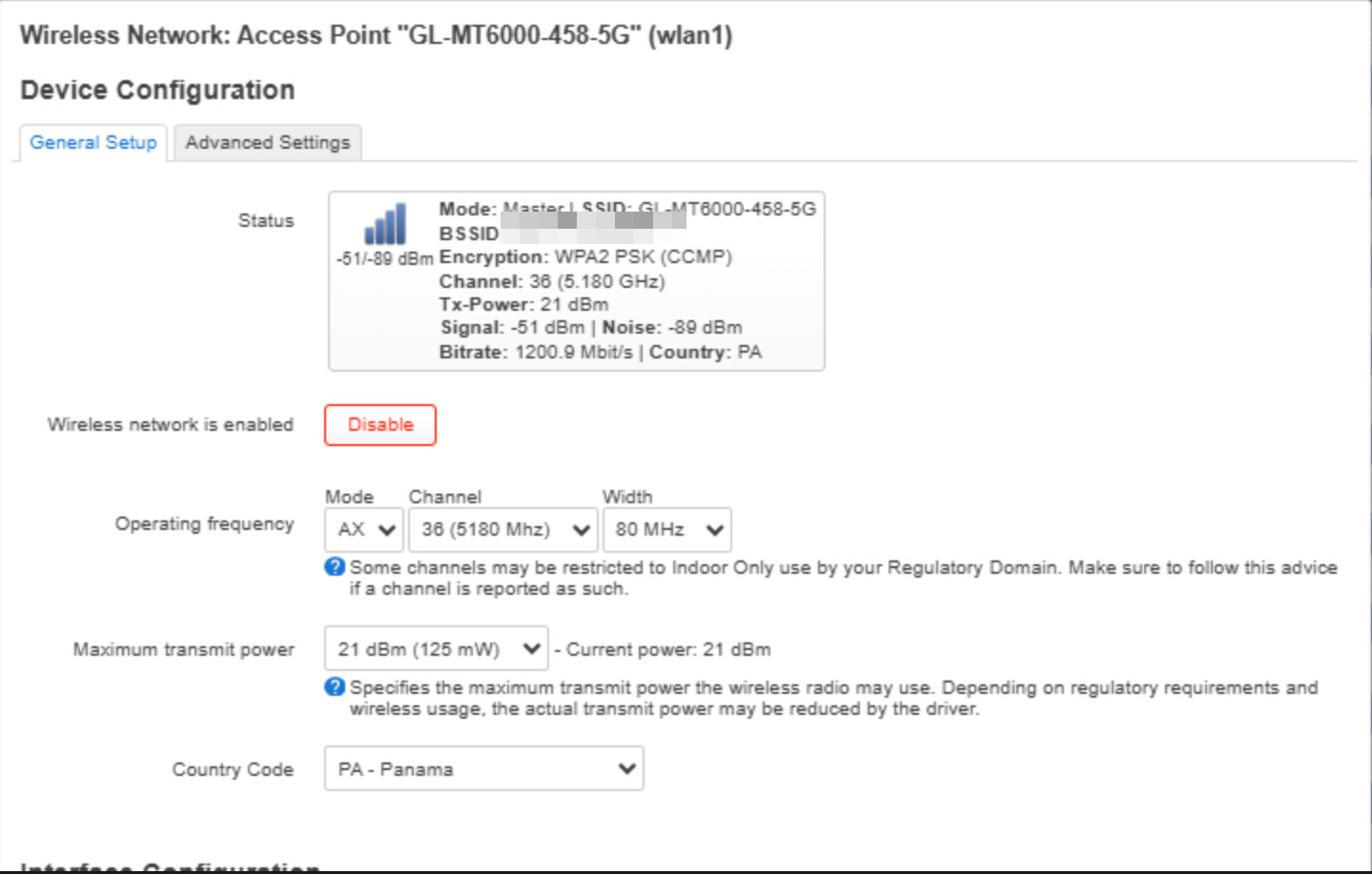
Panama
When the GL.iNet Admin Panel shows:
- Wi-Fi Coverage = High
LuCI reports:
-
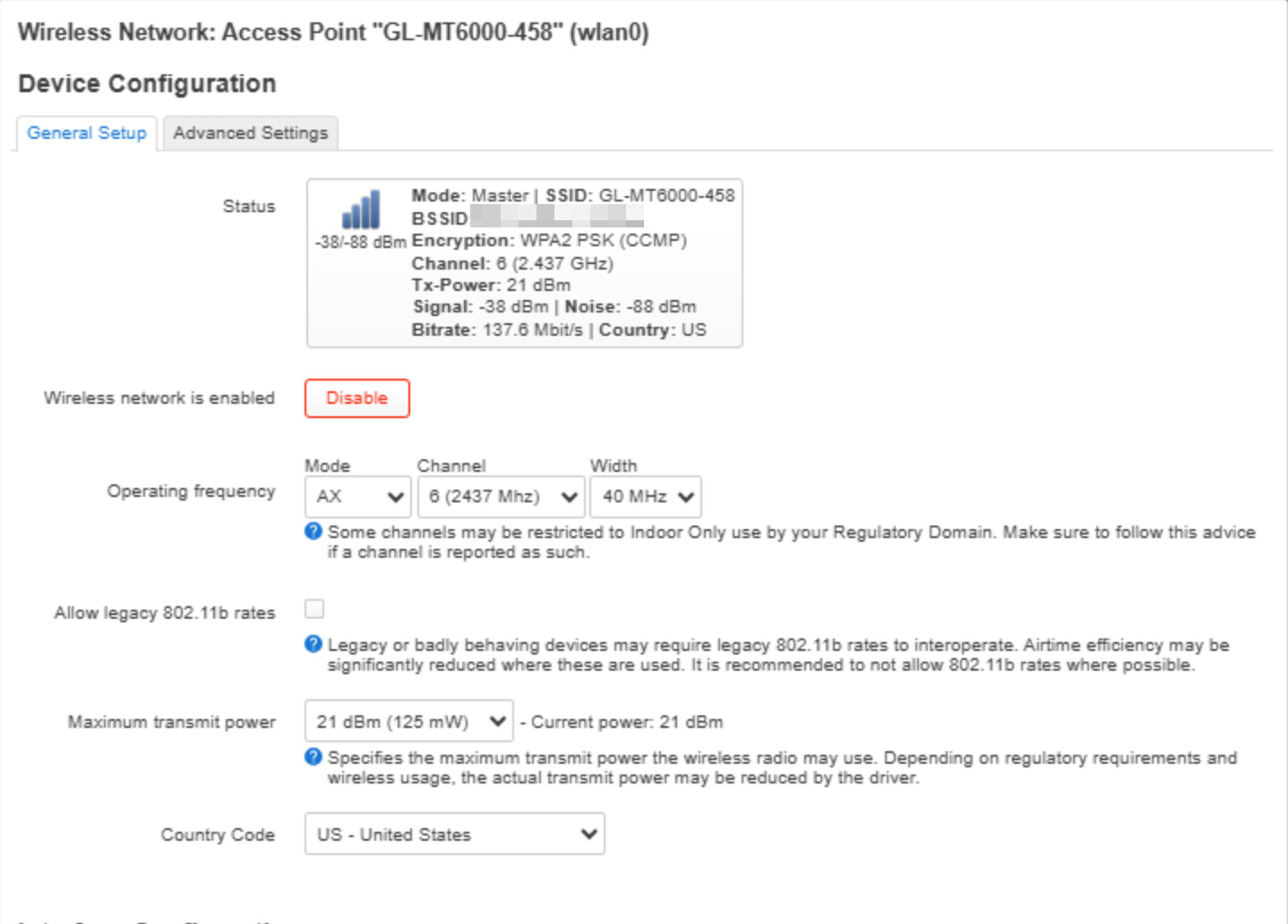
2.4 GHz = 33 dBm
-
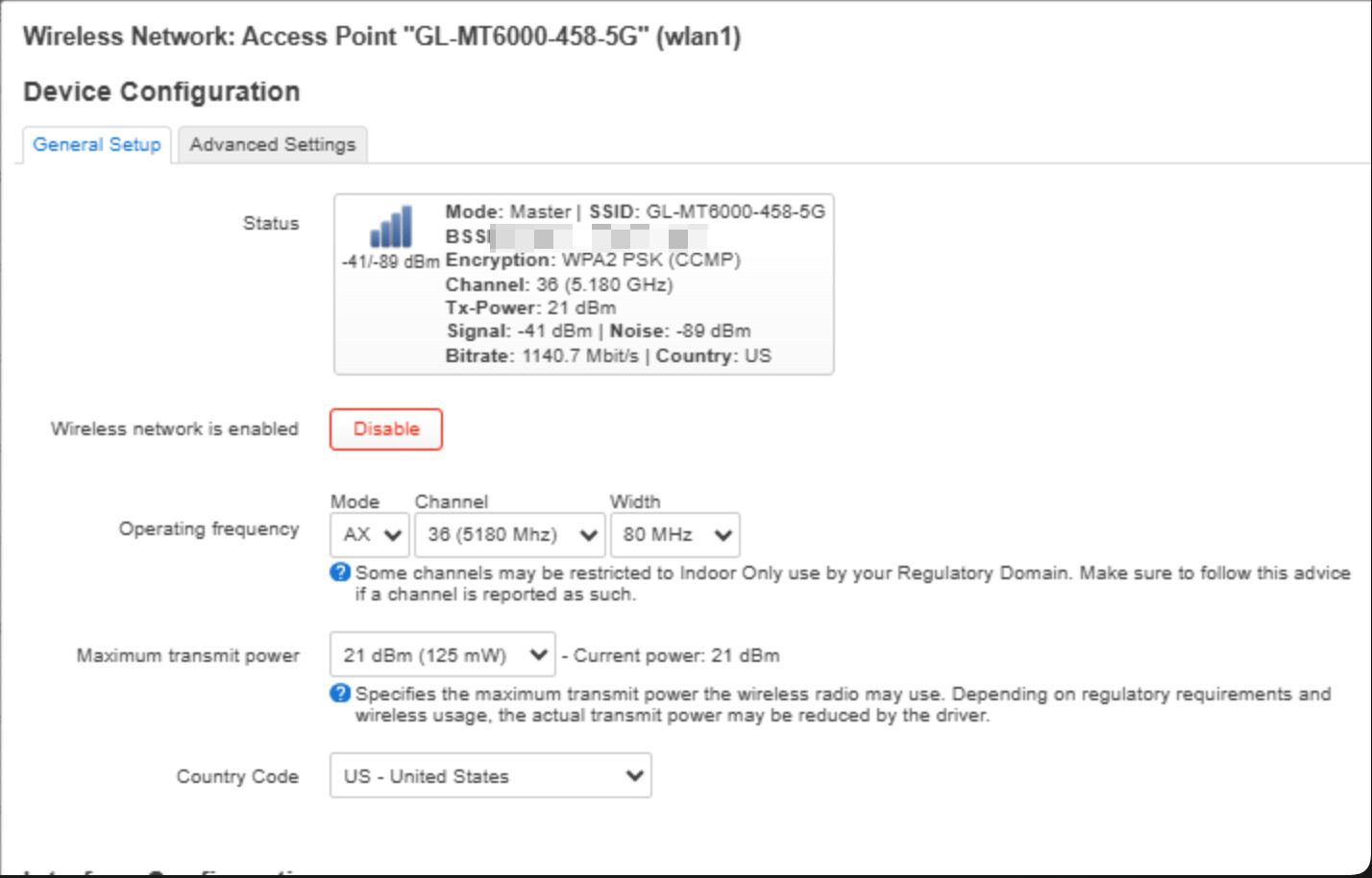
5 GHz = 32 dBm
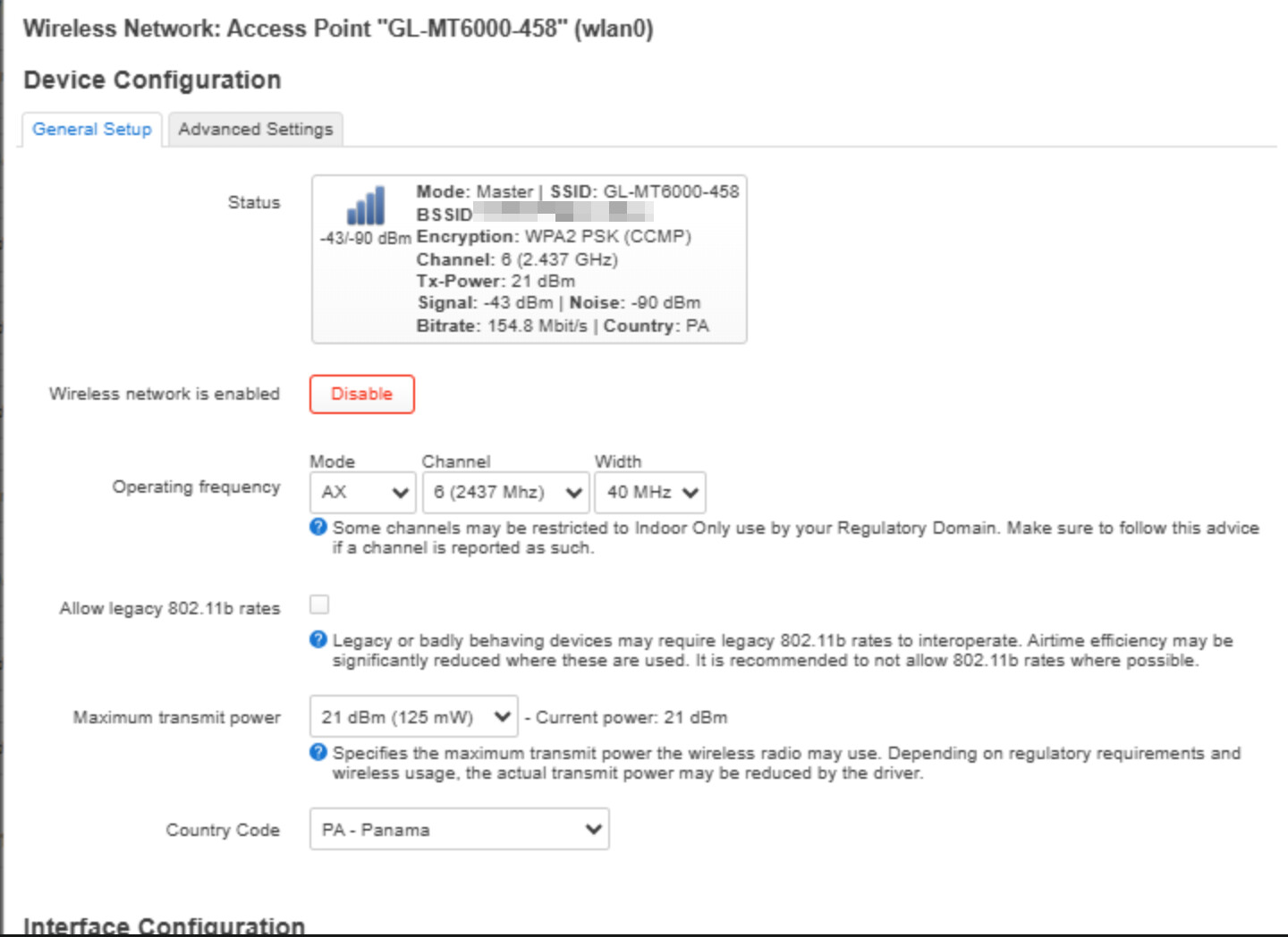
However, if I manually change Wi-Fi Coverage from High to Max, LuCI immediately changes both radios to:
-
2.4 GHz = 30 dBm
-
5 GHz = 30 dBm
This seems unexpected because selecting “Max” actually lowers the reported transmit power.
Test 2 – AirPort Utility RSSI
Measurements were taken at exactly the same location.
Panama (High):
2.4 GHz:
- approximately -53 to -56 dBm
5 GHz:
- approximately -65 to -66 dBm
USA:
2.4 GHz:
- approximately -56 to -60 dBm
5 GHz:
- approximately -66 to -68 dBm
Result:
Panama + High consistently produced approximately 2–3 dB stronger RSSI than USA.
Test 3 – Client RSSI reported by the router
I also noticed that the router reports client RSSI values that differ significantly from external measurements.
Example:
iPhone located approximately 3 meters from the router.
Router reports:
- approximately -67 dBm
Apple AirPort Utility reports:
-
2.4 GHz = approximately -40 dBm
-
5 GHz = approximately -46 dBm
Despite this difference, Wi-Fi performance is excellent.
Test 4 – Performance
Speedtest results remained almost identical:
- Download: approximately 250–300 Mbps
No noticeable throughput difference was observed between USA and Panama.
Current observations
-
Panama + High appears to provide the strongest real-world signal.
-
Changing Wi-Fi Coverage from High to Max reduces the reported TX power in LuCI.
-
Client RSSI reported by the router appears significantly different from measurements obtained with Apple AirPort Utility.
-
Wi-Fi performance remains stable and excellent.
Questions for GL.iNet
-
Is the Wi-Fi Coverage (High/Max) behaviour intentional?
-
Is the TX power synchronization between the GL.iNet Admin Panel and LuCI working as expected?
-
Are the client RSSI values displayed by the router known to be inaccurate in the current OpenWrt 25 Beta?
-
Is this behaviour related to the MediaTek SDK/OpenWrt 25 driver?
I hope these measurements are useful for both the community and the GL.iNet developers.
Thank you.