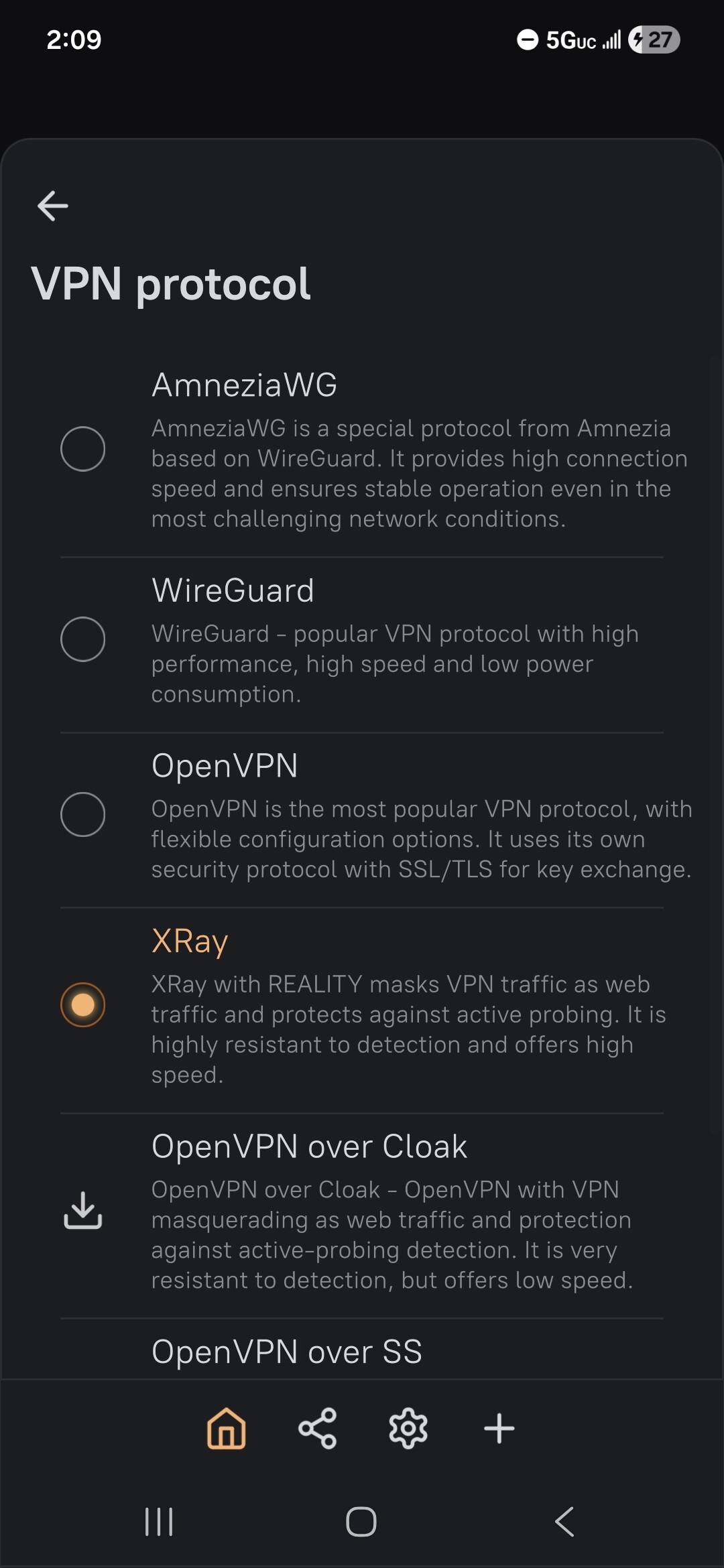
Native VLESS/Xray support in the firmware would be a significant differentiator for the travel router market. The built-in OpenVPN/WireGuard options are unusable in countries with DPI-based censorship, which is arguably one of the primary use cases for a travel router.
It would be worth noting that AmneziaWG, while a welcome and much anticipated forthcoming addition, works best in countries where unfamiliar UDP traffic is not actively identified and cut. It implies that where these kind of traffic is actively identified, UDP-based protocols tend to get throttled or blocked entirely. Xray with VLESS+Reality over TCP is significantly more reliable in these scenarios since the traffic looks like normal TLS web browsing to DPI systems.
I have been using VLESS+Reality on my devices individually but my goal is to be able to get to my hotel, connect my GL-iNet router to hotel WiFi via Repeater, flip the toggle switch, and every device on my travel router’s WiFi tunnels through VLESS automatically. No per-device apps, no configuration on phones or laptops.
Manually installing Xray and setting up iptables-based transparent proxying is not easy for a nob like me but I think I might have just gotten my MT3000 working that way.
I stress think because there is still a step of real-world testing. So far, I know VLESS+Reality works on my devices and I can connect to my VLESS+Reality server elsewhere (at home). With the help of AI, I was able to SSH in, manually installing the Xray binary (cross-compiled for the MT3000's architecture), and configuring it via a custom config file. I then set up a transparent proxy with iptables rules to route traffic through the Xray client, pointing to a VLESS+Reality server running elsewhere. It took a bit of manual work since there's no GUI integration. It was rather frustrating process because it took a lot of trial-and-errors, compounded by AI telling me it was confident that a particular path would work, and in the end it didn’t! There were endless pitfalls along the way.
But now, at least as far as my MT3000 is concerned, I have manually-installed Xray working. It survives reboots, and I (well, AI) configurated the physical toggle switch to turn on and off Xray. The only thing left is real-world test when I travel (but I see no logical reason why it should not since VLESS+Reality works on my phone). Fingers crossed. I will report back.
Obviously, I will have to avoid firmware updates because it would break the manual install. My next project is to do something similar to my Slate 7 and the Mudi 7 (when I receive my order).
So a plea to GL-iNet that some of us would really love to see native Xray support in the firmware — even a basic client option in the VPN protocol menu would be a huge win for users who travel to restrictive network environments. Yes, not a lot of commercial VPN providers are supporting it, but is this not a case to increase sales so we keep another GL-iNet router at home as Xray server?