I have a new Opal router that I am using in passive extender mode, merely extending the wifi signal of the main router without performing any DHCP or other functions. This is my goal, as I want to be able to have a transparent home network throughout without a firewall/subnet.
My wifi is working great in the area of the Opal router, but I also have two ethernet - only devices I need to hook up, but it appears that the LAN ports no longer work. IS THIS TRUE? If so, is there anyway to have both wifi and LAN ports working without the Opal going into router mode?
I'm using basically the same setup: Verizon FiOS 1GB internet via a FiOS CR1000A main router; Opal router in Extender mode connected to main router via WiFi; and a desktop client connected to one of the Ethernet LAN ports on the Opal (desktop is Ethernet-only; has no wi-fi.) Internet access from the desktop client works fine. Doing an 'ipconfig' from a command prompt on the desktop, the response is what I would expect: Default gateway and DHCP server are both 192.168.1.1 (i.e. the FiOS main router), subnet mask 255.255.255.0 (same as FiOS router) and IP address is 192.168.1.190 (assigned via DHCP from FiOS router).
Problem is that I can't see the desktop from anywhere else on the network. Viewing the 'Devices tab' on the FiOS router page, it shows the Opal device as 'GL-SFT1200' with the same IP address as the desktop (192.168.1.160), and the desktop isn't shown at all. I've tried connecting to the desktop at that IP address via SMB from another device on the network, but as expected get no response.
Shouldn't both the Opal extender and the desktop appear in the list of FiOS router devices, with both having different IP addresses? Is there a workaround for this?
Extender mode actually goes through the WWAN (repeater) interface and simulates a 2-layer bridge network. The client connected to Opal will obtain the DHCP IP from the main router and it will join the network segment of the main router. This way is only processed in the network layer, but not the MAC layer.
Thus the client connected to Opal (Extender mode) may no longer appear in the FiOS client list, or it (desktop) will display the hostname SFT1200 + actually IP, or vice versa.
However, it does not affect any network connection, that is, the client device connected to the main router is available to access Opal's client device.
Are you currently encountering problems with connection or access between different client devices?
Yes. All other devices on the network are connected to the FiOS router, and all can see/access one another without problems.
The Opal (currently in extender mode) is also connected wirelessly to the FiOS router. The router has a 'DNS Server' tab that lists "all computers known by the router's DNS server", and there is an entry for 'GL-SFT1200' which was assigned an IP of 192.168.1.227.by the router's DHCP. Also shown on the DNS Server tab is 'XPS8700' (the Windows desktop connected to one of the Opal's LAN ports), with an IP of 192.168.1.160. So far, this all makes sense to me.
But when I go to the FiOS router's 'Devices' tab, I see only the 'GL-SFT1200' with an IP of 192.168.1.160. Neither the XPS8700 device or the 192.168.1.227 IP address appear anywhere on the Devices tab.
No other devices on the network can see or connect to the XPS8700 (apparently including the FiOS router itself.) In fact, the router page has a Tools tab that lets you ping any address within or outside of the LAN. When I attempt to ping 192.168.1.160, it tries four times and returns a "Test Failed, No Response" error message. But if I try pinging 192.168.1.227, I get 'Test succeeded' for all four pings!
The preceding two paragraphs make no sense to me. What am I missing? Is there some option that needs changing, either in the Opal mgmt page or within Luci?
Just FYI, I have used a Linksys RE6800 wireless extender (which unfortunately I don't have here...) with the same FiOS router, and it worked fine. The only other piece of info I recall reading somewhere had to do with the extender's 5 Ghz channel selection - you couldn't use the extended 3-digit channels. I can't recall if this tip applied to the Linksys extender or the Opal, so to be safe I've set the channel to the highest 2-digit choice displayed (I think it's using 48 right now.) Still no visibility or connectivity to the Opal's XPS8700 client.
OK, I officially qualify for a "dumbass" award: The XPS7800 desktop is set as a "private network" (MS says that's the right choice for a trusted network where other computers need to access this Windows machine.) But looking further in 'Firewall and Network Protection', the default is to have the firewall 'on' even with private networks. The moment I turned it off, SMB connections from other network clients (like my Android devices) instantly began working! MS Defender Firewall is squawking loudly about "using settings that may make your device unsafe", but I don't care because a) you still need a username/pswd to create an SMB connection; b) I control all the other devices on the network; and c) the FiOS router firewall denies any incoming connections from outside the LAN. I'm running Windows 11 Pro Insider Preview, and I'm wondering if this firewall default setting changed at some point. I was probably on Win 10 when I last used the Linksys extender, so I'd bet it would show the same behavior as the Opal if the private network firewall was on. Sometimes I really hate Windows!
So once again this thread can happily go back to sleep. The problem was entirely due to Windows Firewall, and not the Opal extender. I still don't understand why the XPS8700 client isn't visible from the FiOS router, and why it doesn't appear in local network scans from other devices, but hey - at least I can connect to it now using the IP address.
I have a similar setup but a different problem. My main home router is a Netgear Nighthawk running openwrt. I bought an Opal to use as an extender to create a mesh network reachable from my garage (too far from the Nighthawk.) I set it up in extender mode with the same SSID and password. The problem is that from the main network I can’t access (or even ping) the Opal or any of the devices on the extended network. It’s as if there were NAT. Is this something I have to use Luci to configure?
Thank you, Bruce. Here are my details.
The main router is a Netgear Nighthawk running OpenWRT 24.10.1, network 192.168.1/24, router 192.168.1.1. The WAN port connects to the cable modem. It has wifi SSID RATS2 and DHCP range 100 limit 150.
I did the following:
Factory reset the Opal.
Connect a laptop via wired ethernet (wifi disabled) to Opal. Browsed to 192.168.8.1. Set the password.
Went to Network | Network mode | Extender. Joined RATS2 with password.
There was a brief red warning that something timed out.
I unplugged and replugged the ethernet cable. DHCP assigned me 192.168.1.101.
In Luci on the Nighthawk, I determined the Opal is 192.168.1.206. (I'd like this to be static but I don't see the setting.)
Browsed to 192.168.1.206. Logged in.
I see the following settings on the Internet page.
The diagram shows Repeater - GL-SFT1200 - 0 WLAN clients - 1 LAN clients
Both 5G and 2.4G wifi show enabled.
RATS2 (5G)
IP address 192.168.1.206
Gateway 192.168.1.1
DNS 192.168.1.1
BSSID BC:A5:11:BC:A6:55 (Note: this is an Amazon MAC which is surprising, we have no Echo devices)
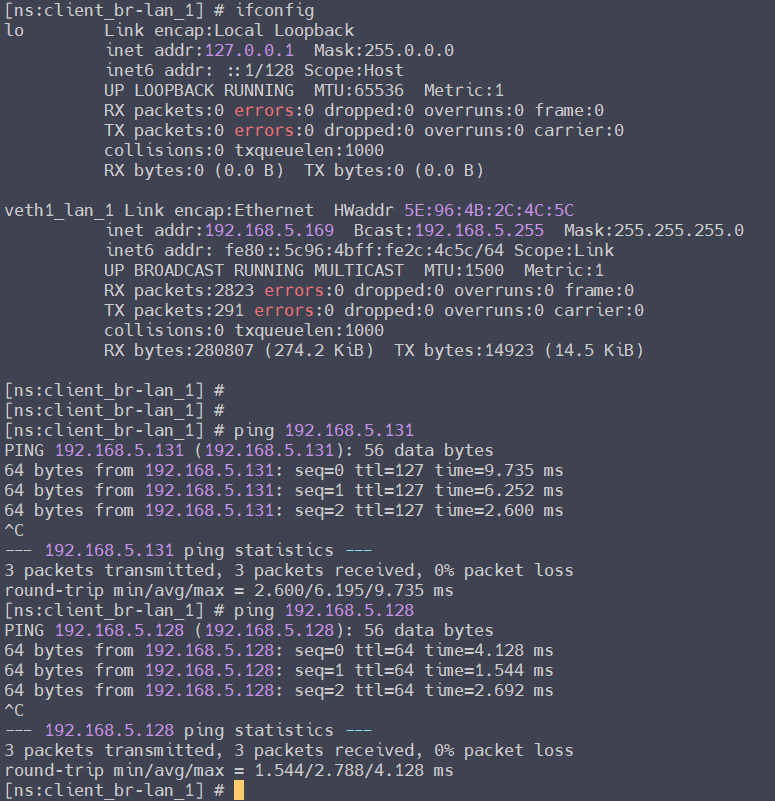
From the laptop 192.168.1.101 I ping 192.168.1.12 on the main net, it pings OK
From 192.168.1.12 I ping 192.168.1.101, it fails.
From 192.168.1.12 I ping 192.168.1.206, it fails.
(Also, do I need to configure a different DHCP range for the Opal?)
In all these “extender” mode experiments never forget that you are forcing a wifi connection (regular 802.11) which uses only 3 addresses (MAC source,MAC sender, MAC receiver) , instead of the 4 addresses (source/sender/receiver/destination) for wired ethernet or for a WDS/mesh connection.
In the normal 4 address case each device normally uses it’s own MAC and IP address. In the wifi case with extender , there is no destination MAC, only the receiver MAC used for all destination devices. So DHCP would have to hand out 2 or more IP addresses for one MAC address. Not all DHCP server settings allow for this by default! Also the extender distribution table per IP address for the same used MAC, needs to be populated. So the client must be the first to communicate, or the extender would not know where to send the packet, based on the IP address (and using the local cached MAC address of the destination). That distribution table may have some timeout setting, the “local MAC/IP address” data may disappear when not used for too long.