I recommend you using Quad9 and Cloudflare DNS
I use them (DoH) and I haven’t had any issues in a year, I think only once
1 Like
Sorry i dont understand what are you saying, Can you please retype? Where is 2ndlink about DNS providers?
This:
I use these:
https://dns.quad9.net/dns-query
https://dns.cloudflare.com/dns-query
Those are encrypted DNS over HTTPS, you can find them on that link. It is also on the DNS tab of AdGuard
Hello,
Should I use them on AD guard home or my main router?
My setup is like this: 4G LTE modem → Flint 2 → WiFi
On my 4G modem, I don’t have the ability to change the DNS. It’s some crappy modem. I tried to play around with drop-in gateway on Glinet to see if I can change my 4G modem’s DNS on Flint, but it seems like it’s not working that way. When it comes to DNS, I get pretty confused because you can set DNS on the first modem, then on GLinet router, and then in AD guard home which is in the GLinet too, and then also on the laptop. So I’m trying to figure out which one is the main. To my knowledge, the Flint 2 can do this and force all clients to use GLinet DNS which was set on it. But then a question comes up - what would happen to the first and main modem’s DNS, which receives the internet?
Use them on AdGuard and all your devices will use those you provide on AdGuard, if AdGuard is enabled it will handle those requests, and you won’t be able to customize DNS settings on the GL GUI. Don’t worry about your ISP DNS because those won’t be used.
You can run a DNS leak test here: DNS Leak Test - BrowserLeaks
Make a test connected to your main modem (or without any DNS changes on your Flint 2, AdGuard disabled) and identify your ISP DNS and then make another test with AdGuard enabled, you will see if there is any leak, it should look like this (These are Quad9 and Cloudflare DNS):
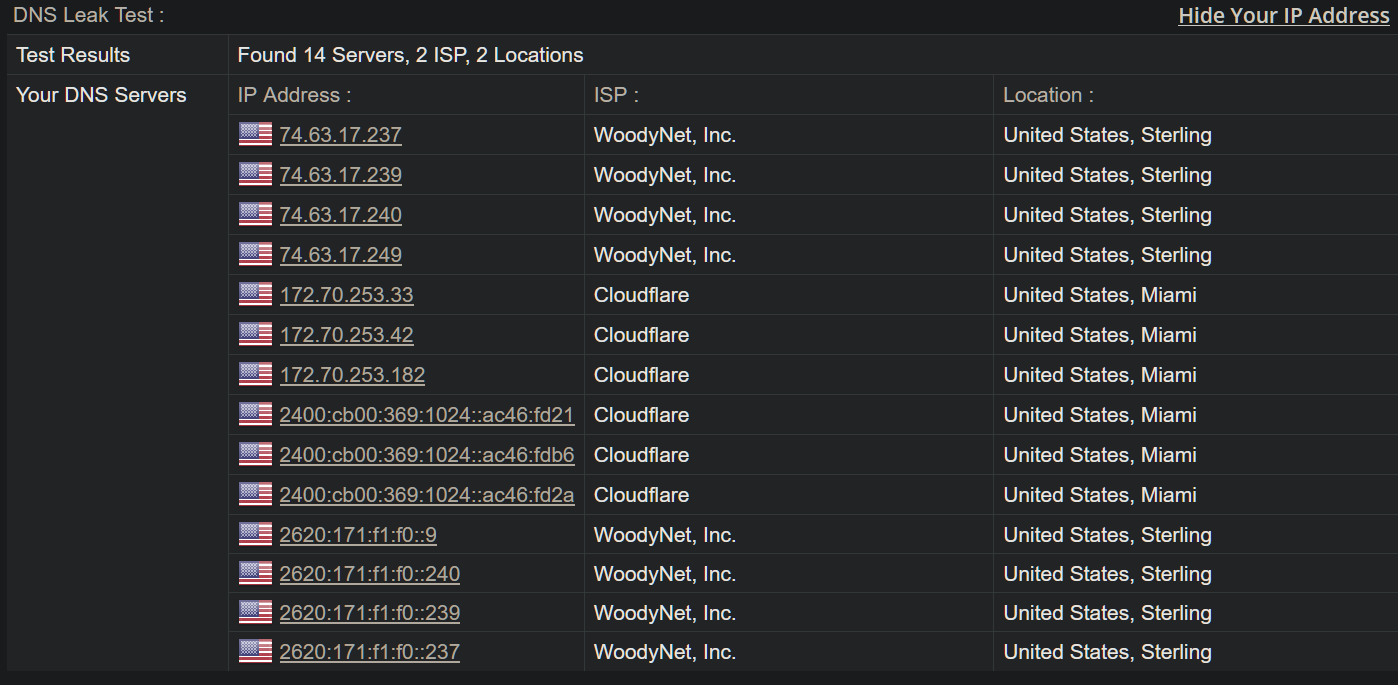
You should be able to identify your ISP DNS quickly, however you will always see your ISP public IP assigned to you, to change that you can use a VPN
(WoodyNet is one of Quad9’s DNS providers)
Thank you for your guidance. Before I proceed with implementing your suggestion, I believe it is important to inform you that I am required to maintain a constant VPN connection due to the high level of content filtering in my location; approximately 90% of the sites are inaccessible otherwise. In light of this, as you can see from my previous message, when I activate AdGuard Home, I lose internet connection, which I suspect may be related to the configurations implemented in the upstream space.
With this context, assuming your recommended solution is effective in isolation, I have concerns regarding how it might interact with my VPN service. Specifically, does the VPN override the DNS settings established by AdGuard Home? I would greatly appreciate your advice on this matter, taking into account my need to remain connected to the VPN at all times. Thank you once again.
No, as long as you use the VPN on the router and have AdGuard enabled, or the encrypted DNS option enabled on the GL GUI. Otherwise, it will use your VPN provider’s DNS. The VPN will use the DNS addresses provided by AdGuard if it is enabled, of course. You can even have a VPN client based o VLAN policy, with the guest network for VPN and the private network for your normal internet, so you’re going to see your ISP IP on the private network and the VPN IP on the guest network, but both will use the encrypted DNS you have on AdGuard.
Delete all your upstream DNS servers and use Quad9 just to test (I trust Quad9 when it comes to privacy) and if you can’t access the internet with AdGuard just disable it, and on the DNS settings on the router choose a provider for encrypted DNS, that way if you have a VPN client you will not use your ISP IP or their DNS servers, for more privacy. Choose a VPN provider you like
If AdGuard home is enabled (even the VPN on your router), if you connect to a VPN from one of your devices, let’s say a mobile with the VPN app of your provider, then it will override the DNS settings you have on AdGuard and will use their DNS instead, so ads won’t be blocked.
1 Like
Have look your screenshot 
Quad9 recommends to only use Quad9 for better threat blocking, does that make sense to you?
I installed AdGuard Home in my OpenWrt router, and noticed that the Upstream DNS server is Quad9 (https://dns10.quad9.net/dns-query) only, not even the AdGuard servers, is there is reason for this?
Should I add more DNS servers as backup? Thanks
AdGuard Home is a completely different product than AdGuard DNS.
So you can choose any upstream DNS you like.
I'm using using AGH to point to authenticated/paid Adguard DNS for my upstreams. All DoH or encrypted TLS. But when I go to enable encrypted DNS it says 443 isn't accessible... Didn't work when I port forwarded 443 either. If I leave DNS encryption off for AGH but input Adguard DNS's authenticated DoH and Encrypted TLS addresses for upstreams, are they still encrypted?
Just put address upstream in Adguard home.
Hello,
I soule like some explanations about the results.
How I know if there is a dns leak?
Here what upstream servers I have in my AdGH instance:
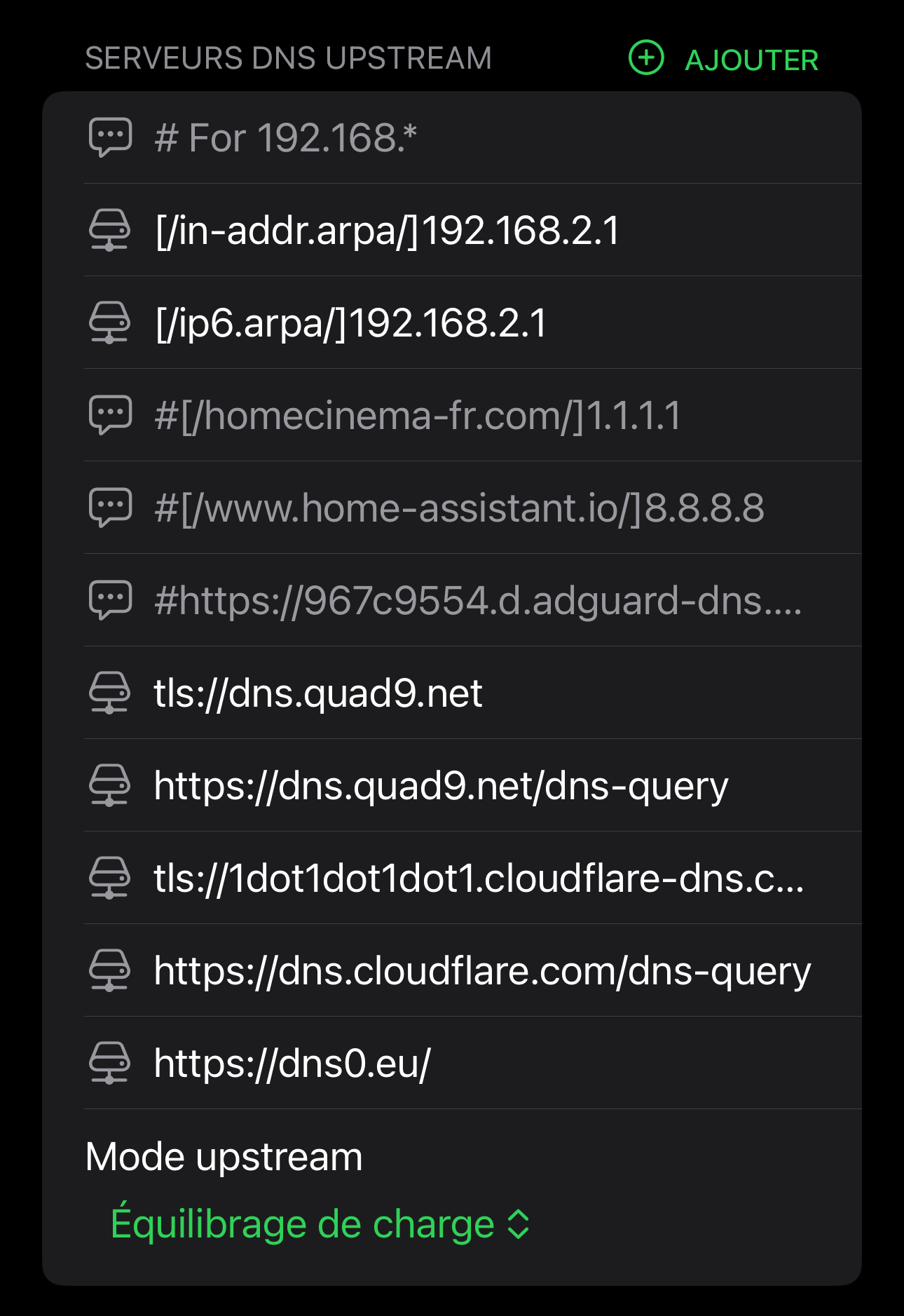
And here the dnsleaktest results:
-
with
dsnleaktest.com:
-
with
[Preformatted text](https://browserleaks.com/dns):
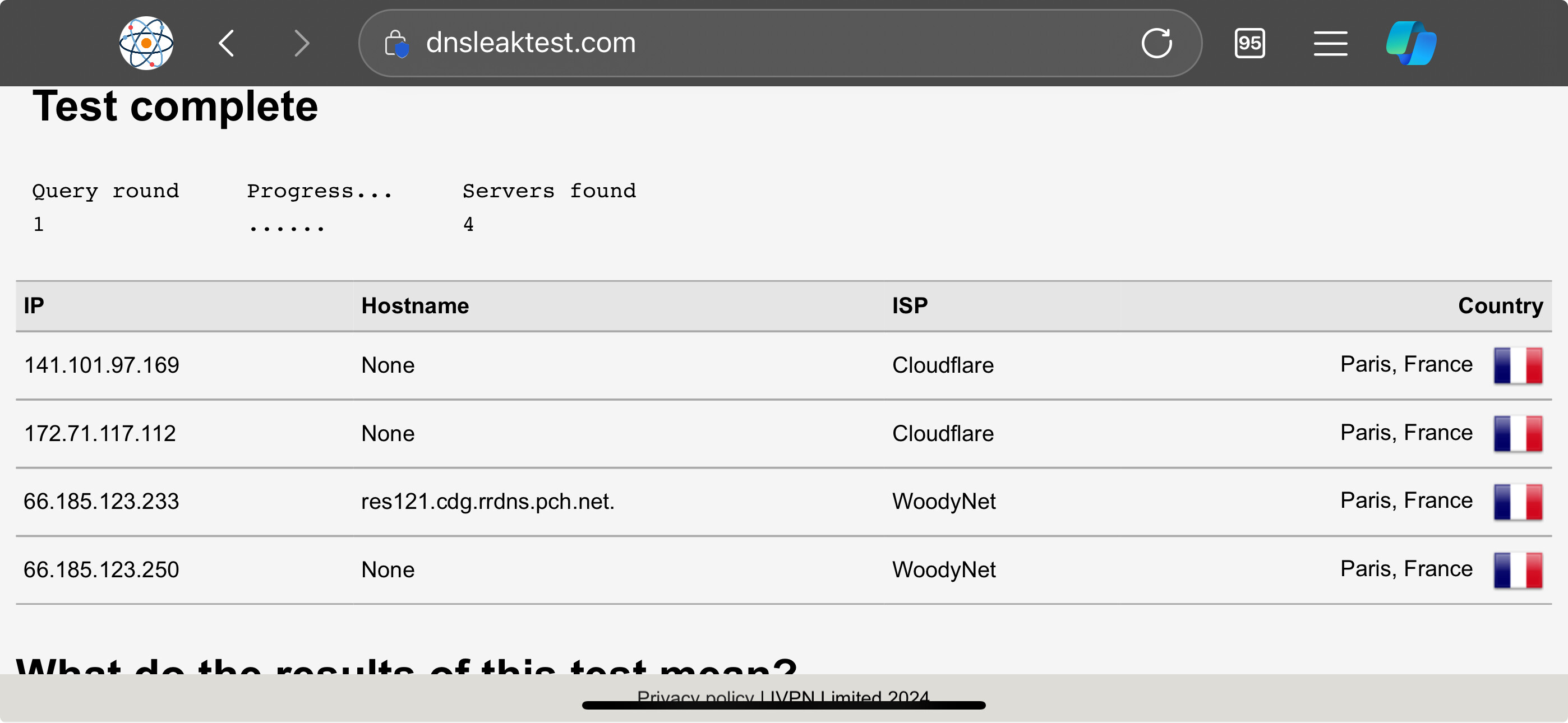
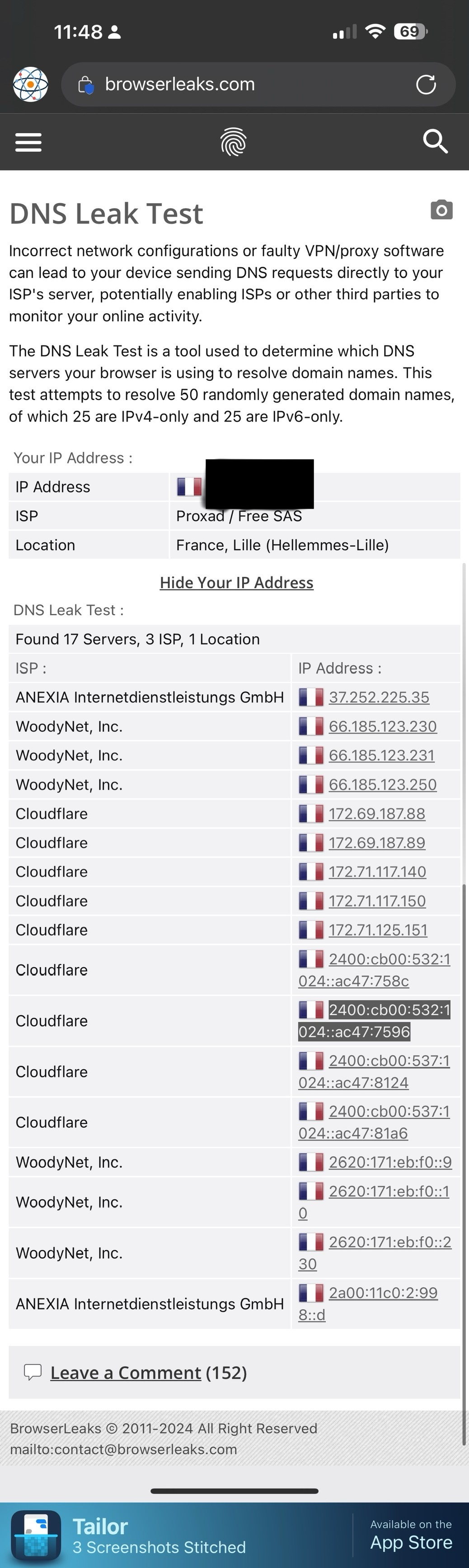
I don’t know how to interpret those results.
Can you tel me if I have a dns leak?
Thanks in advance 