I wonder if this is related to my issues. Not sure. When I first received my Flint 3, before doing anything I upgraded the firmware with the option to erase the configuration.
I haven’t done anything with package installs or in LuCI. I installed Adguard, Tailscale, and Wireguard server using the native options.
But even after disabling all of these again, I can’t get the router to get any packages with opkg at all. It just says “Failed to update repository list, please check your network and try again.”
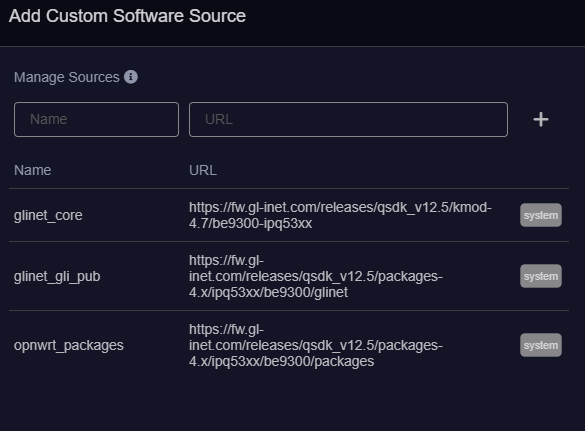
I’m not using anything but my ISP’s native modem behind it, with all traffic forwarded and its firewalls turned completely off. My internet on all my devices work fine. But opkg can’t get any updates. In fact, if I try to open the URL’s it has, it gives me Cloudflare 404 errors:
Are these links current and correct? I just want to install a couple small packages that will help me out. This was one of the main reasons I bought this router and I can’t use it.
Please disable the VPN, AGH, and change the DNS to Manual mode Google, execute opkg update in SSH,
if update failed, please also execute wget https://fw.gl-inet.com/releases/qsdk_v12.5/kmod-4.7/be9300-ipq53xx/Packages.gz
and share the result here to further check.
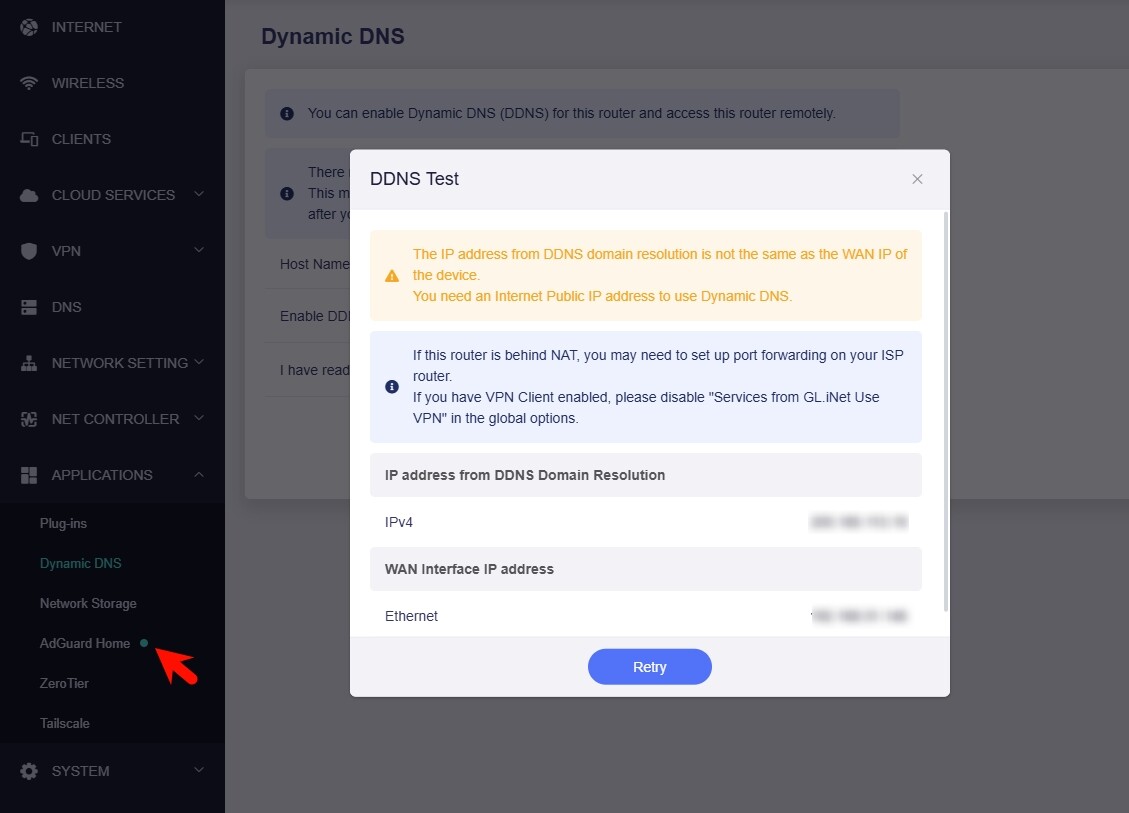
Please try disabling the ADG, and check the DDNS test again to see if it works fine.
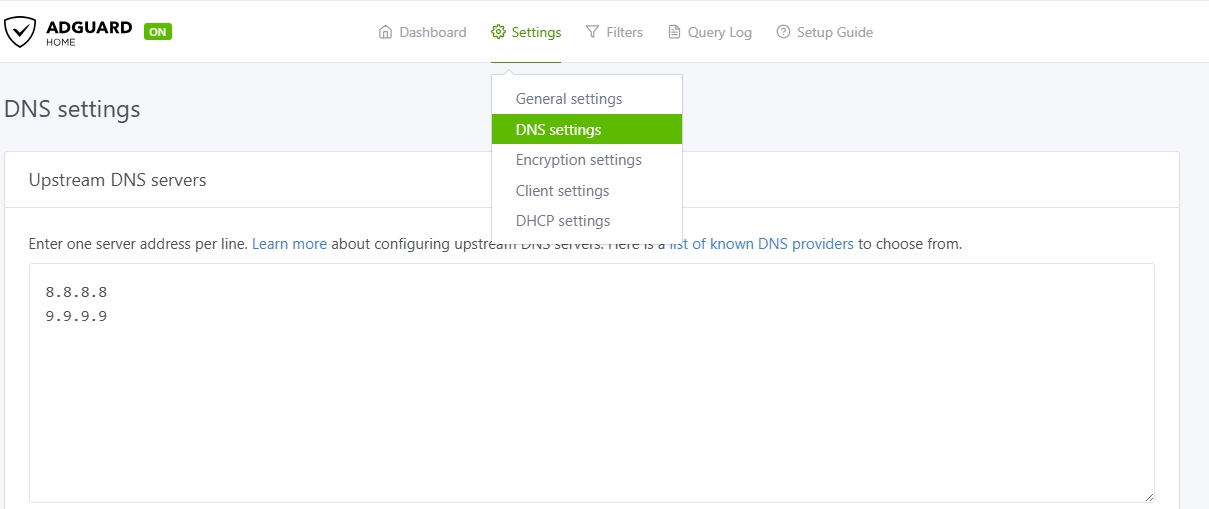
If step 1 is done properly, please enable the ADG, and go to setting page > Settings > DNS settings, change other available DNS servers, like https://unfiltered.adguard-dns.com/dns-query, and "test upsteams" before clicking "apply".
Hello @bruce, you probably don't know much about this, but does gl.inet have any plans to help the OpenWRT forum community port this router to the list of compatible devices? I would like it to support an official version sooner or later (I know it has a Qualcomm chip, which makes it very challenging, but I'm not giving up hope). Thank you in advance.
We are developing based on QSDK. Due to certain protocol requirements, we cannot proceed transplantation, and this typically requires the chipset manufacturer to take the lead.
Once this CPU (SOC) solution is open-sourced in the OpenWrt community, we will submit the hardware parameters at once and integrate them into the OpenWrt open-source firmware.
Just kidding. Once there are enough products on the market using this CPU solution, I think Qualcomm will have the incentive to push for open-sourcing.
I understand. I was just wondering if your company could put pressure on Qualcomm to open-source it, or perhaps if several users got together, we could also put pressure on them in one of their forums or on their website. Thank you.
That's a long time. I was hoping to see Flint 3 in the OpenWRT community so they could work on it in a few months. It's a shame. I hope the next Flint4 uses a Mediatek Filogic 880 processor or higher
It would be good for additional SSID support for IoT devices in the official GUI as its a standard configurable features in other router (eg Asus) for security matters as most IoT devices support WPA2 instead of WPA3. As Flint 3 supports max 12 SSID, now only 6 SSID is being configurable.
I know this is an old topic, and I don't want to open a new topic for my question. When will we see the latest Flint (maybe Flint 4) with the same or better hardware characteristics like the Flint 2 (especially CPU-wise, heat dissipation, wi-fi range coverage, VPN stability, and all the other great gestures that Flint 2 has)?
I was looking at the latest BE9300 but the reviews are blocking me. On Amazon it says FREQUENTLY RETURNED. On the other websites people complain about the Wi-Fi coverage and internet speed.
I would instantly buy Flint 4 if it had the characteristics of Flint 2 CPU-wise and Wi-Fi coverage.
Tthe "Flint 4" is currently in the R&D stage. Because it is still early in the process, we cannot disclose specific hardware specs or performance data just yet. What I can tell you is that there is still a significant amount of time before it reaches the retail market. We are taking the time to ensure it lives up to the "Flint" reputation for power and reliability.
Understanding the Feedback on Wi-Fi 7 Models (like BE9300), regarding the reviews and return rates you've seen on Amazon, we want to provide some technical context:
Wi-Fi 7 is a cutting-edge standard. Many issues reported by users are often rooted in client-side compatibility (phones or laptops with older drivers) or a misunderstanding of the 6GHz band, which naturally has less wall-penetration than the 2.4/5GHz bands.
We understand the frustration regarding stability. It is important to be transparent: Wi-Fi performance is heavily reliant on the underlying drivers provided by the chip manufacturer (Qualcomm). Until the chip vendor releases updated driver sets, stability and coverage improvements are limited from a software-only perspective. This is why many "pro" users still prefer the Flint 2, as its Wi-Fi6 wireless drivers are currently exceptionally mature and stable.
If your priority today is maximum Wi-Fi coverage and proven VPN stability, the Flint 2 remains recommended flagship. It has a massive cooling overhead and a CPU that has been thoroughly optimized for high-throughput tasks.
If you are not in an immediate rush to upgrade, we suggest keeping an eye on our community. We’ll be sure to share news as soon as the next generation Flint moves closer to a public reveal.
Thanks Bruce. I have plenty of time and I won’t ever think of leaving my Flint 2 for anything else, except for an better performing, solid and durable Flint NexGen. I used to have several routers from vendors like, Netgear, ASUS, the flagship FritzBox 7950AX, and many other provider-specific routers. When I came to know about the OpenWRT project, characteristics and features, I tried to install it on the above mentioned routers, none of which was compatible. It was a complete surprise when I discovered that there is a company named Gl-inet that manufactures devices already shipping with OpenWRT. So I made some other research and read tons of reviews until I finally decided to get a Flint 2, and I never regretted my decision! The out-of-the-box features like VPN, AdGuard, and Wi-Fi performance and stability are extraordinary. I retired my Pi-Hole device on a Raspberry and all the custom features I used to have in a all-in-one device (or almost).
My dream router is a Gl-inet router with the same robust features of the current Flint 2 but with a Fiber cable ingress and and telephony support so that I can ditch my provider’s upstream router forever and have one single device.
I have plenty of time and Wi-Fi 7 is not my priority. I already have a 40 euros Tenda BE6L Wi-Fi 7 router that performs quite good that I use as a repeater to reach my garage from my flat in the second floor to my garage below the street level. I do not like the way I am forced to manage this router and cannot wait to have a Flint 4 as my main router and my Flint 2 as a trusted repeater.
If you need fiber interface, the next GL desktop router (probably Flint4) will be worth waiting for — it will offer more interfaces and more powerful connection options.
 Call Qualcomm!