Hi,
The dependency packages of luci-app-statistic are added in repo, please check again
Hi,
The dependency packages of luci-app-statistic are added in repo, please check again
Thank you, much appreciated!
Hi,
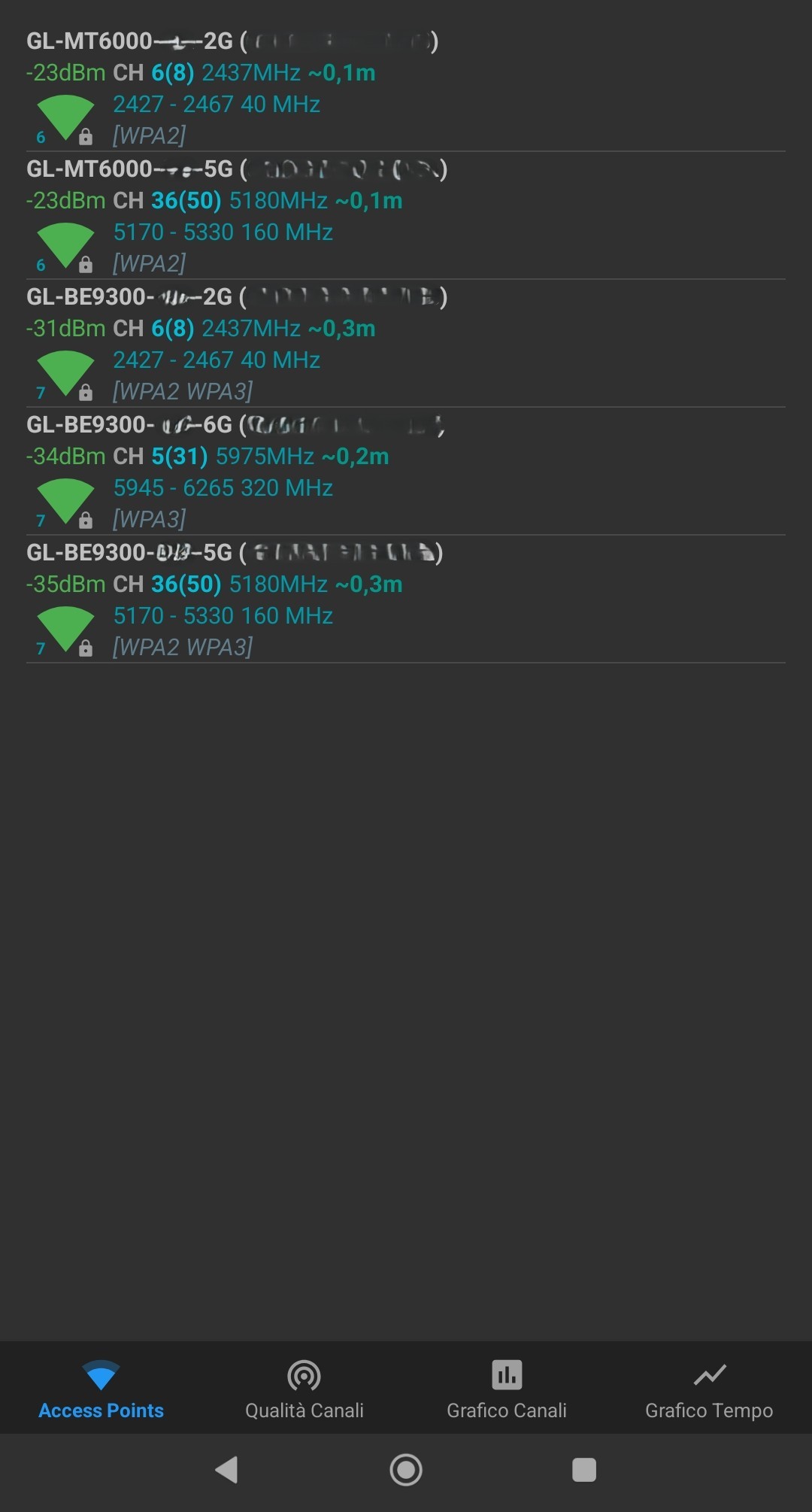
since I've been using the GL-BE9000, I've noticed a shorter WiFi range and less stable signal. I compared it to the MT6000 I was using previously and the difference is quite significant.
Are you experiencing the same issue?
Tested with 4.7.11 and 4.7.13.
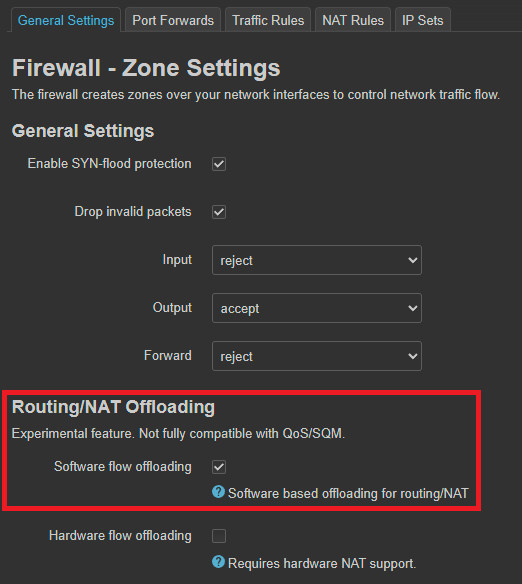
Found a nasty bug in v4.7.13 (possibly 4.7.11) where if you disable Hardware Acceleration in the GL UI and then try to turn on Software and/or Hardware Offload in LuCI and reboot the router after the reboot DHCP leases are no longer offered and cannot connect via HTTP (80), HTTPS (443) or SSH (22) to the router. Router still responds to ping at last set IP. Had to do 10 sec reset button to restore default settings to recover.
Tested on a fresh reset and still happened.
@bruce ^^ for attention.
Can confirm that Slate 7 on 4.7.3 also suffers from the same bug. And looks like you don’t have to disable hardware acceleration on GL panel for the bug to appear.
Interesting. Nice write up on your thread!
Probably an upstream QCA SDK issue then.
Probably. I didn't thought Qualcomm firmware can be so buggy like this haha
Guess there weren't a lot of people enabling software/hardware flow offloading or packet steering in LuCI? Otherwise they may have caught the bug sooner. It's a shame to lose these performance enhancing features, hope a fix is on the way.
Is 4.7.13 the latest or has a newer version available to try out?
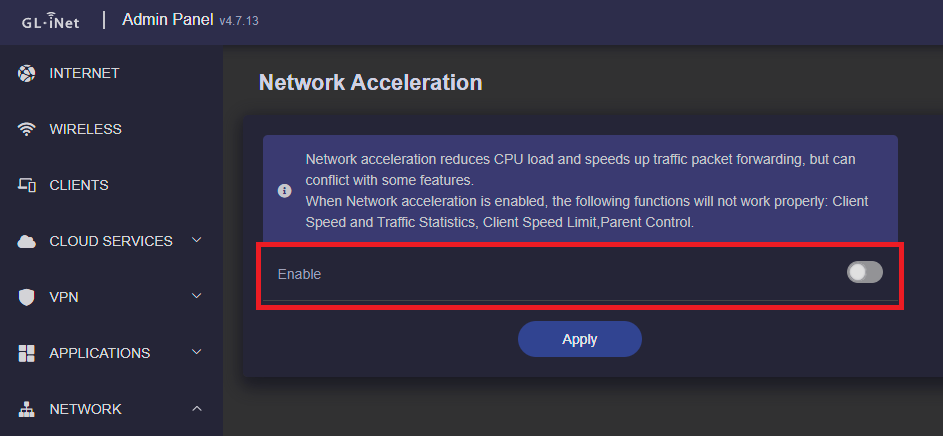
I think it may be the QCA SDK issue about nss module does not compatible with Luci, please enable/disable or select the mode of Network Accelerate in the GL GUI.
The v4.7.13 firmware needs to be regression tested and then upload to the firmware center. There may also be a newer version released, and the next version firmware in center may be higher than v4.7.13.
You should let us know the error content
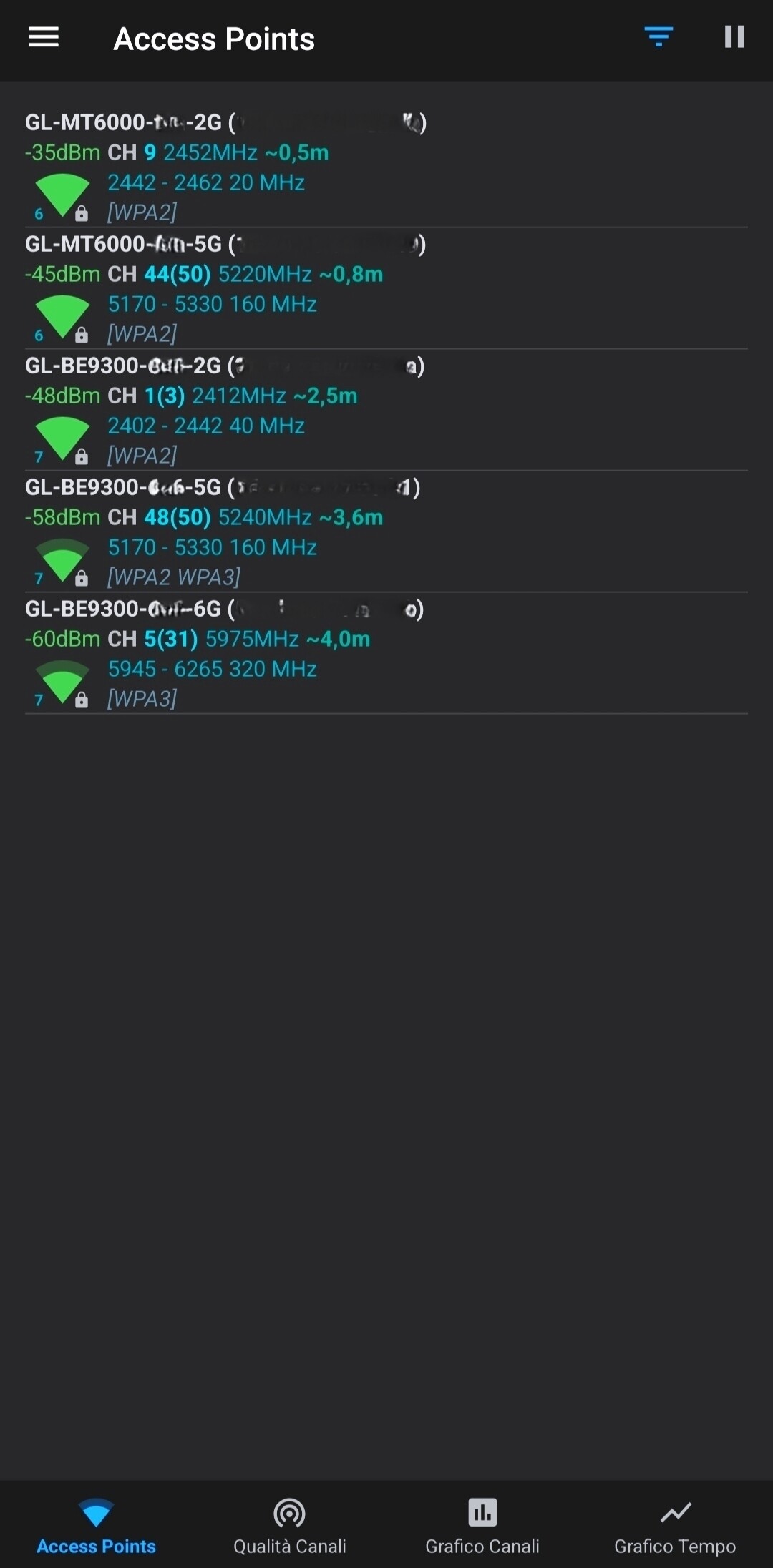
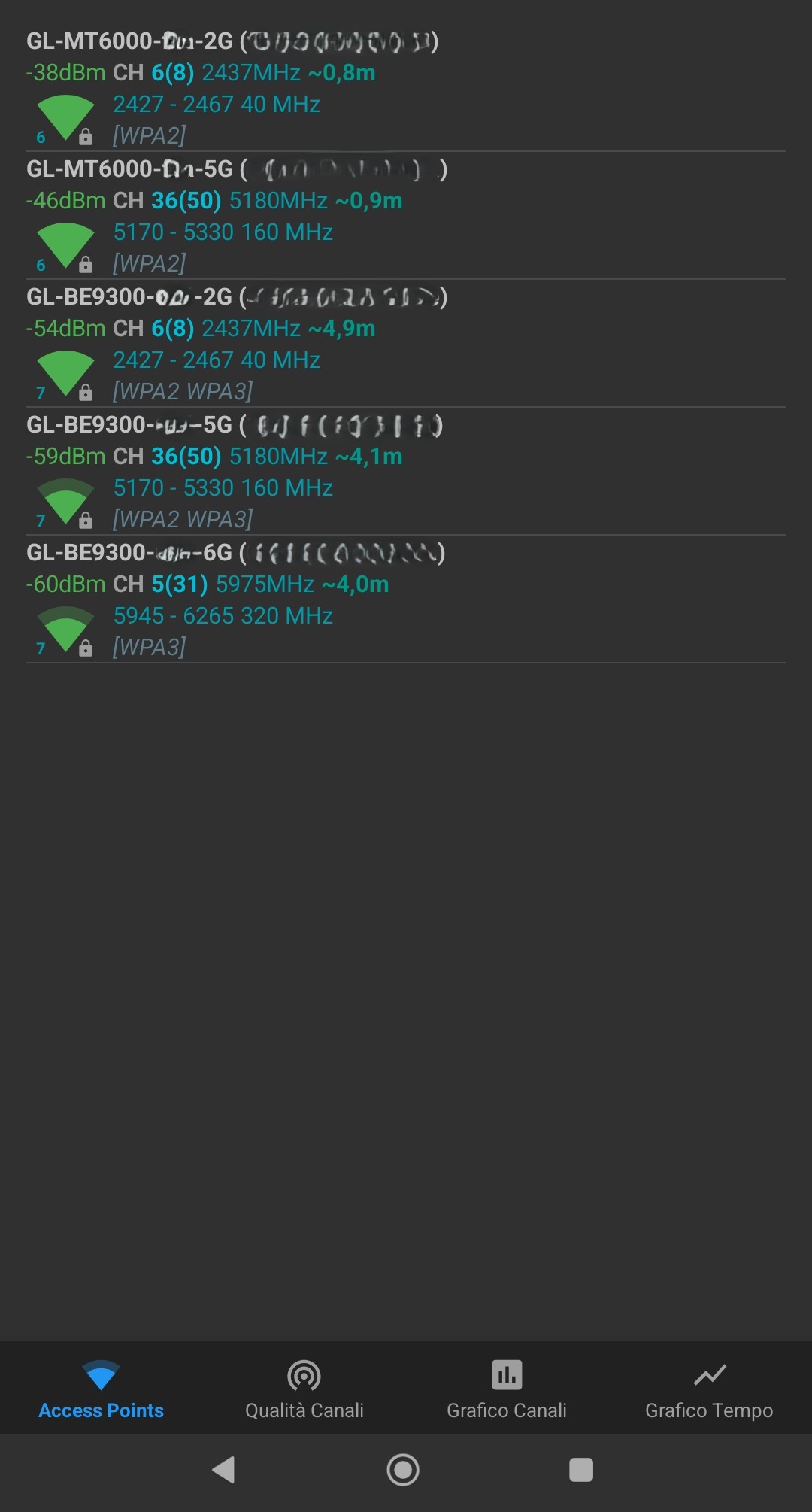
The automatic channel and bandwidth selection is different. Can you fix the Flint 3 to the same channel and bandwidth as the Flint 2?
Hi Miles,
Thanks for your reply.
I repositioned the MT6000 near the BE9000 and set the same channels and bandwidths.
The MT is running firmware 4.7.7 and the BE is running 4.7.11 (I tried the 4.7.13 that was posted on the forum, but I didn't see any improvement and reverted to the "stable" version, obviously by resetting it).
I'm attaching two measurements, one taken in the room adjacent to where the routers are located and one in the same room.
According to the latest firmware version of the firmware download center, which it is v4.7.11, v4.7.13 has not been officially released yet, please wait.
We also reproduced this problem on Flint3.
The issue is caused by the Luci firewall accelerate rules flow_offloading '1' and flow_offloading_hw '1'.
The accelerate of Flint3 and Slate 7 use qca-nss-ecm module, which is not adapted with the Luci. After configuring it in Luci, and the /etc/init.d/firewall restart will report the errors, or aftet restarting the router, the firewall LAN rule is lost (br-lan traffic does not allow access to the router local service), resulting in all services are unable to access, like DHCP, SSH and Web UI, etc.
Please configure "disable/enable" the network accelerate feature in the GL GUI.
Hi @bruce,
Is there a timeline for the release of a version beyond 4.7.11? Perhaps it will bring, for example, improved Wi-Fi signal coverage and stability?
The current gap with Flint2 is too great. The temptation to revert to Flint2 while waiting for developments is growing stronger.
Thank you.
Is there a Beta version we can use on the Flint 3, or do you have a timeline for the release of the Beta version?
I installed v4.8 on the Flint 2 and it did make a difference to the operation of the Router, not to mention the new VPN was perfect.
I guess the best approach is to wait until this device is supported by the OpenWrt community.
That probably will happen on the next 12~18 months.
Hi,
I think this approach is a bit too drastic.
The GL.iNet team is building a very intuitive GUI that makes it easy to perform operations on OpenWrt.
As with Flint 2, I think Flint 3 suffers from teething problems that will be resolved.
That's what I hope and wish for.
For me, the Flint 2 only recently became really stable, about 18 months after its release. I'm now running vanilla OpenWrt on it and have absolutely no regrets.
Look what @pesa1234 is doing here
I expect the same thing will happen with the Flint 3, mainly because they've switched from MediaTek to Qualcomm.
We'll have to wait for the community to develop proper support for this new device.
OpenWrt doesn't currently support the Flint 3, and GL-iNet is heavily reliant on Qualcomm for everything.
I'd read in one of the various posts that pesa was working on a custom version, but I'd never looked into it. I took the opportunity of your suggestion to read up on what he's doing, and it's truly impressive.
The Flint 2 with the GL GUI did what I needed.
The upgrade to the Flint 3 was done for fun and to try to break the 2.5 GB transfer barrier on my internal network (6GHz band and link aggregation with my QNAP).
Currently, I can't even match the previous performance.
A few posts ago I posted the wifi differences I noticed between the two Flints and I'm waiting for a response from @Miles to understand if it's a known issue that will be fixed or if this is the Flint3 standard.
Hoping it's not a hardware issue as I read that some people found the coverage to be even better than the Flint2.